Public Services
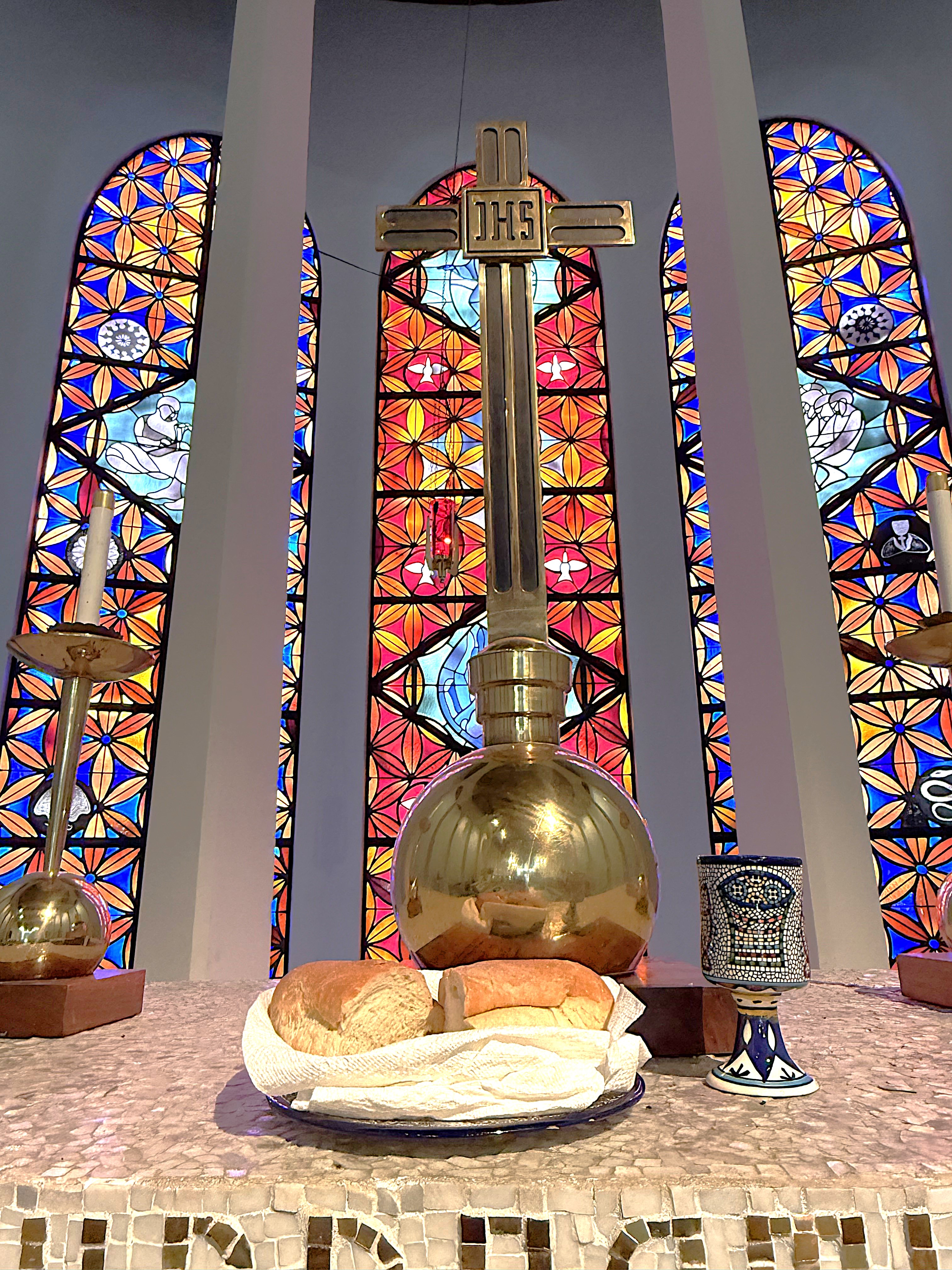
Please join us for Public Worship every Sunday at 10AM! Our music combines traditional hymns and modern songs. Childcare is available for families, and a timely message about today's social issues is delivered. After prayer concerns and readings from the Bible, we keep an open Communion table where everyone is invited to partake in the sacramental Bread and Cup. He is Risen Indeed!
Santa Clara UMC is not only notable for our stainglass (also below) but having a sizable altar, chancel (or choir area), and rails. For more questions be sure to visit our FAQ Page.
Sunday Worship Meetings can easily be had Zoom, click here.
Contact us about Rentals for Funerals, Life Celebrations, Weddings and other special events (see at bottom).
United Methodist Worship
The United Methodist Hymnal (1989) and Book of Worship (1992) are the cornerstones of our worship. They offer a rich tradition both Protestant and catholic that is flexible and comprehensive. United Methodists have roots in all branches of Protestantism—Anglican, Lutheran, Reformed, and even Mennonite. Altogether, liturgical and charismatic elements mark our worship, emphasizing the Christian year alongside modern language & women officiants. (--based on Rev. Hoyt Hickman's 'Overview of Worship' )
Our Sanctuary
Our church building was built in 1965 upon donation of the 4-acre site from the Inman family. Bishop Tippett blessed the Sanctuary on May 30th, 1965 after a grand parade through the downtown.
The church Bell and stained glass windows were eventually brought over from the 'Stucco Church''s location on Liberty/Main Streets and installed in the 1970's. Mrs. Ruth Frey led the committee to salvage and restore the windows. The names of families from both the Stucco and current-day church have been inscribed, including the Hatchetts and Austen Warburton. They were rededicated by Rev. Frasier in 1974, "In humble recognition that we are the inheritors of all that has gone before, the bride to all that lies ahead".
The Sanctuary has been used for public worship, baptisms, weddings, and burials for over sixty years. It can be rented for special events, and you may join our religious worship in-person or online.
Weekly Communion
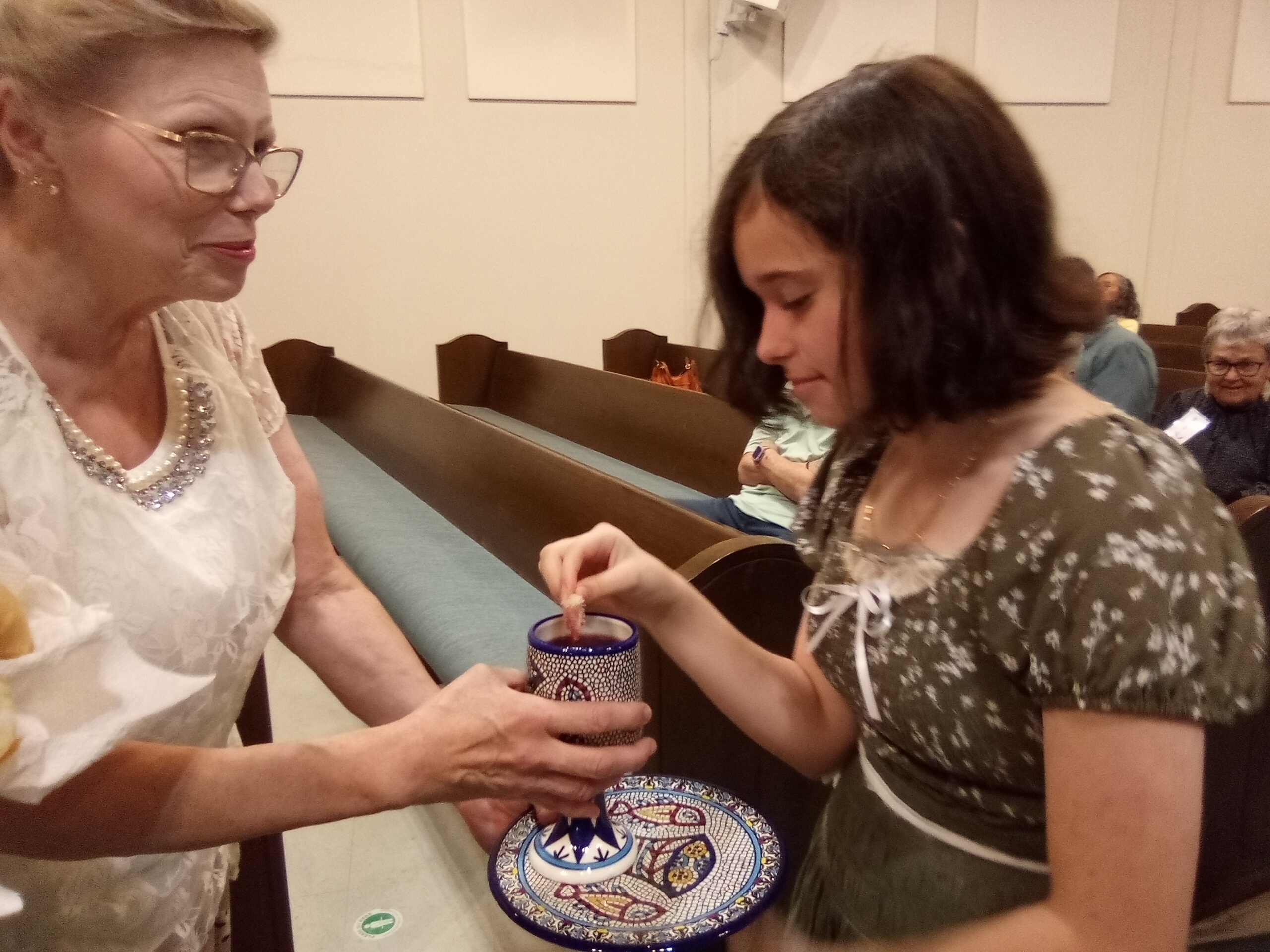
Holy Communion, or the Eucharist, is open to all people. The Lord's Supper is based off of Jesus's visit and meal with his disciples in the upper room. For distribution we break leavened bread together with a cup of grapejuice. Our prayers ask for the pouring of the Holy Spirit upon our hearts as well as the bread & cup for Jesus.
We practice Open Communion. All who intend to lead a Christian life are welcome to receive, "Christ our Lord invites to his table all who love him, and earnestly repent of their sin and seek to live in peace with one another". Communion is offered every Sunday, and we often partake by intinction which means we take a small piece of bread and dip into the cup ourselves to eat.
Note: The use of grape juice by the UMC dates to the Temperance movement, expressing a concern for recovering alcoholics, participation of children, and types of abstinence. Interestingly, Thomas Welch, the inventor of grapejuice, was also a Methodist. The use of grapejuice is sometimes called the "Welch Rubric".
Baptism & Confirmation
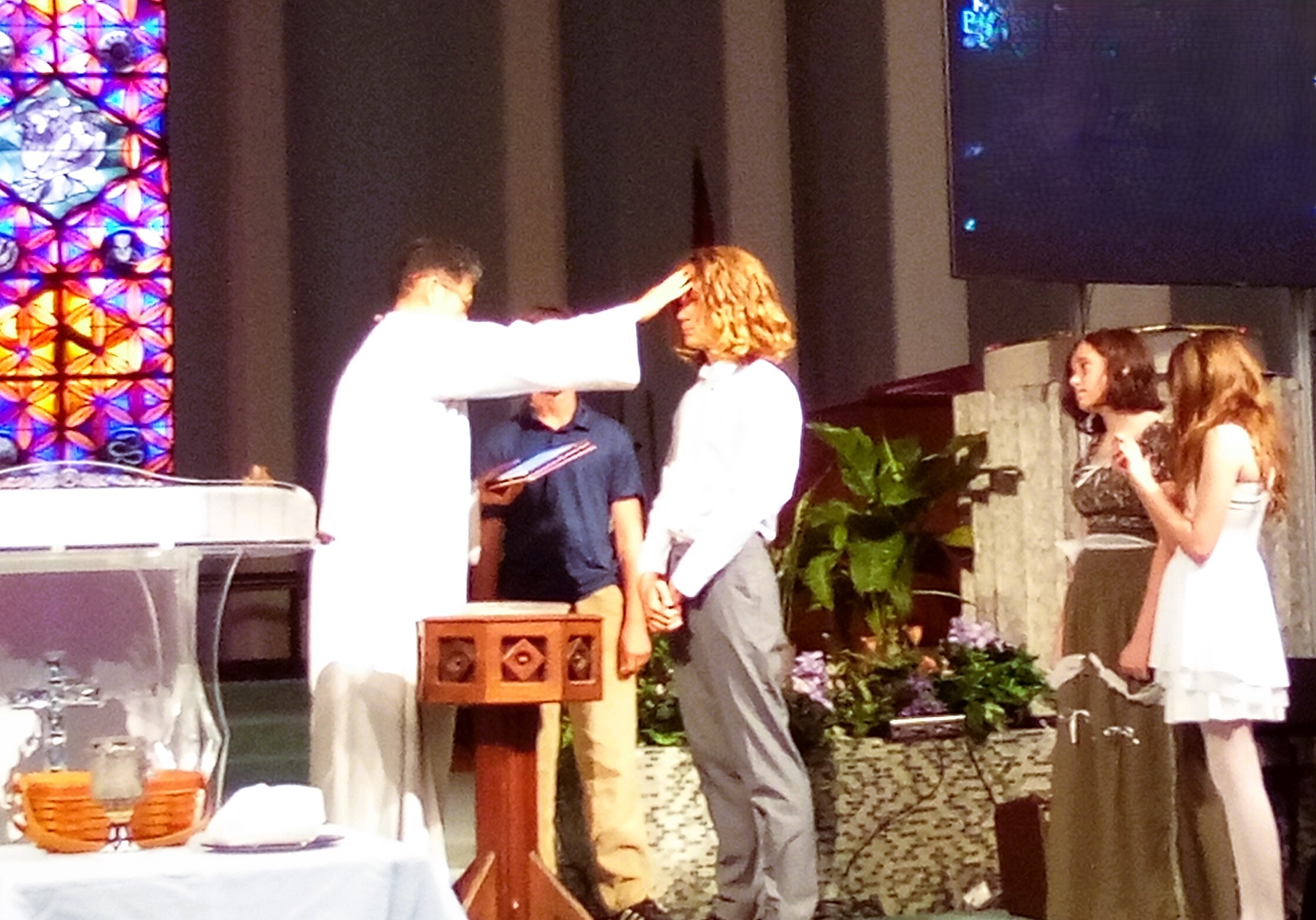
Baptism with water in the name of the Father, Son, and Holy Spirit unites us to the whole Church-- not just a denomination. United Methodists recognize all Christian baptisms with water, and look upon this ordinance something that should unite rather than divide. You may choose baptism by sprinkling, pouring, or immersion.
Either upon baptism, or anytime thereafter, we may confirm our love of Christ by public vows and prayers. A Confirmation vow that renounces evil and professes faith (usually summed by the Apostles' Creed) before the congregation.
If desired, full-membership into the local church and larger United Methodist Church can also be had. For those Christians who wish to remain in another denomination, an affiliate or partial- membership is possible.
Marriage & Funerals (also Rentals)
Marriage and Funeral (sometimes called Life Celebrations) services are offered to all United Methodists. However, we also rent our Sanctuary to non-church members for weddings and funerals (as well as special events like music recitals, etc.). Our Pastor is happy to provide either counseling or ministration for any such service, but parties may bring their own officiant or personal rites if desired. Be sure to contact us for renting and seeking help with such important life marks.
Note: Matrimony and Burials have a civil nature, necessarily conforming to the laws of the state. They needn't be entirely religious, but the UMC has excellent liturgies and forms of service that can be adopted for these occasions. 
-
Location