A United Methodist is someone who does mission by putting faith and love into action. We believe that God loves all people, and we share in expressing that love. So the United Methodist tradition, arguably, is more pratical than absolutely doctrinal. Wesley describes such as "love governerning the heart and life, running through all our tempers, words, and actions."
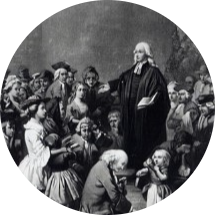
The Methodist movement was started by John Wesley, an 18th-century ordained priest in the Church of England. In his Larger Minutes, Mr. Wesley described the mission of the Methodists "to reform the nation and, in particular, the Church; to spread scriptural holiness over the land." His use of lay-led small groups played major role in the Great Revivals of England and America.
Randy Maddox summed such emphases which made Methodism a potent movement:
"[Wesley] gave particular prominence to the formative power of the faith sung, of small groups that provide support and accountability, and of regular participation in works of mercy. Finally, he recognized the crucial role of mentors, of those who are far enough along in their journey with Christ to be able to say with Paul, 'Be imitators of me, as I am of Christ'" (Karder, p.7)
Methodists first formed themselves into an organized church in North America. In 1771 Wesley appointed Francis Asbury to assist the methodist peope in the colonies. However, due to the dangers of the Revolutionary War, the British preachers-- except Mr. Asbury-- retreated to England. Asbury's tenancity ultimately led to his election in 1784 as the first Bishop of the newly formed Methodist Episcopal Church.
Lesser known, yet important, figures contemporary to F. Asbury include Philip Otterbein and Martin Boehm who built up methodism among Pennsylvanian Germans. There is a certain anabaptist influence here. Germans emigrees and their descendents would eventually make the Evangelical United Brethren church (EUB).
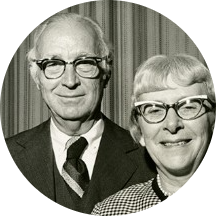
The teachings of both German and English Methodists centered upon practical divinity, laid the groundwork for the merger of EUB and Methodists in 1968, making the United Methodist Church (UMC). Our inherited theology is held forth in the UMC's Articles of Religion, Confesion of Faith, Wesley's Sermon Notes, and General Rules. These documents along with other principles and opinions are earnestly explored and studied through Outler's guide of "scripture, tradition, expierence, and reason".
For a further explanation, see Our Theological Task.
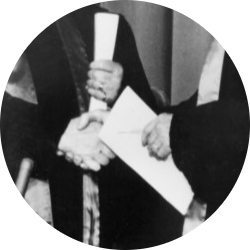
Below is footage from the 1968 founding conference between the United Brethren (EUB) & the Methodist Church (MC). The Union was created upon the memorial handshake of Bps. Wicke & Mueller with the words, “Lord of the Church, we are united in Thee, in Thy Church and now in The United Methodist Church.” Also recorded is Rev. Albert Outler's fameous conference address, "The Unfinished Business of an Unfinished Church".
The footage provides a happy perspective about the same decade when our congregation moved from the downtown to the other side of El Camino Real, on Lincoln St., near the new Civic Center. The UMC's making was a remarkable event in American history, carrying a great promise at a time of noteable post-war optimism.
-
Location